
5 Installing OS (optional)
The device is shipped with an operating system by default. If the OS is corrupted during use or the user needs to replace the OS, it is necessary to re-download the appropriate system image and install it. Our company supports to install the OS by installing the standard Raspberry Pi OS first, and then install the Firmware package.
The following sections detail the specific steps for downloading the image, flashing the image, and installing the Firmware package.
5.1 Downloading OS File
You can download the corresponding official Raspberry Pi OS file according to your actual needs, the download path is listed below:
| OS | Download Path |
|---|---|
| Raspberry Pi OS(Desktop) 64-bit-trixie (Debian 13) | https://downloads.raspberrypi.com/raspios_arm64/images/raspios_arm64-2025-10-02/2025-10-01-raspios-trixie-arm64.img.xz |
| Raspberry Pi OS(Lite) 64-bit-trixie (Debian 13) | https://downloads.raspberrypi.com/raspios_lite_arm64/images/raspios_lite_arm64-2025-10-02/2025-10-01-raspios-trixie-arm64-lite.img.xz |
| Raspberry Pi OS(Desktop) 32-bit-trixie (Debian 13) | https://downloads.raspberrypi.com/raspios_armhf/images/raspios_armhf-2025-10-02/2025-10-01-raspios-trixie-armhf.img.xz |
| Raspberry Pi OS(Lite) 32-bit-trixie (Debian 13) | https://downloads.raspberrypi.com/raspios_lite_armhf/images/raspios_lite_armhf-2025-10-02/2025-10-01-raspios-trixie-armhf-lite.img.xz |
TIP
It is recommended to use the Lite version of the image. For the latest version, please refer to the Raspberry Pi official website: Raspberry Pi OS.
5.2 Flashing Image
ED-CM0NANO supports booting from eMMC or Micro SD card. Refer to the instructions below for flashing image based on the product model selected by the user.
TIP
Customers can choose between the eMMC version or the Micro SD card version when purchasing the product.
- If the selected product includes eMMC, refer to the flashing to eMMC programming steps.
- If the selected product includes a Micro SD card, refer to the flashing to SD card steps.
5.2.1 Flashing to eMMC
It is recommended to use the Raspberry Pi official tools. The download paths are as follows:
- Raspberry Pi Imager : https://downloads.raspberrypi.org/imager/imager_latest.exe
- SD Card Formatter : https://www.sdcardformatter.com/download/
- Rpiboot : https://github.com/raspberrypi/usbboot/raw/master/win32/rpiboot_setup.exe
Preparation:
- The flashing tool has been downloaded and installed on the computer.
- A USB-A to USB Type-C cable (USB flashing cable) has been prepared.
- The OS file to be flashed has been obtained.
Steps:
The steps are described using Windows system as an example.
Disconnect the power supply from the ED-CM0NANO.
Set the DIP switch to the LD position (switch positioned toward the RTC battery base).
Connect the USB flashing cable: one end to the Type-C USB port on the ED-CM0NANO, and the other end to a USB port on the PC.
TIP
In flashing mode, the Type-C USB port serves as both the flashing interface and the power supply interface.
- Launch the installed
rpiboottool to automatically assign a drive letter.
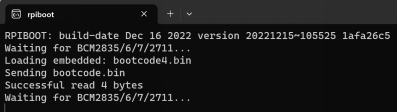
After the drive letter assignment is complete, a new drive letter notification will appear in the system tray (bottom-right corner of the computer).
Open
SD Card Formatter, select the drive letter to be formatted, and click "Format" at the bottom right to begin formatting.
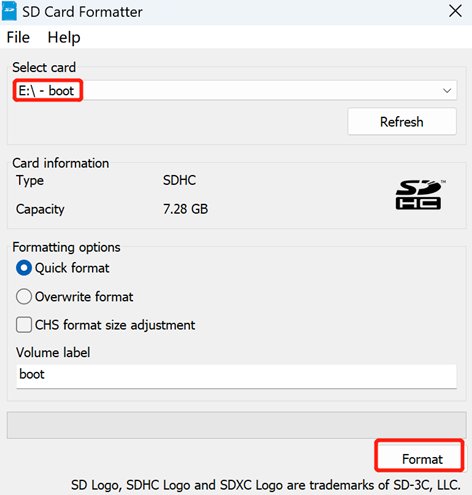
In the pop-up dialog box, click "Yes".
When the formatting is completed, click "OK" in the prompt box.
Close
SD Card Formatter.Open
Raspberry Pi Imager, select "CHOOSE OS" and select "Use Custom" in the pop-up pane.
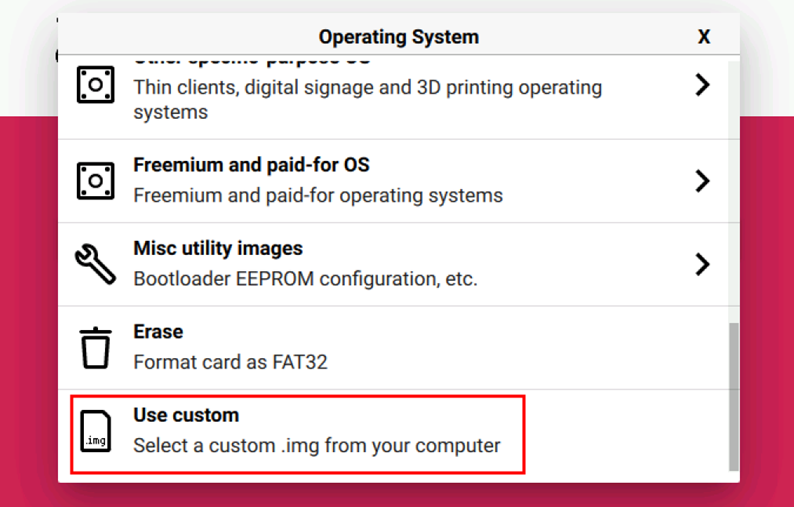
According to the prompt, select the OS file under the user-defined path and return to the main page.
Click "CHOOSE STORAGE", select the default device in the "Storage" interface, and return to the main page.
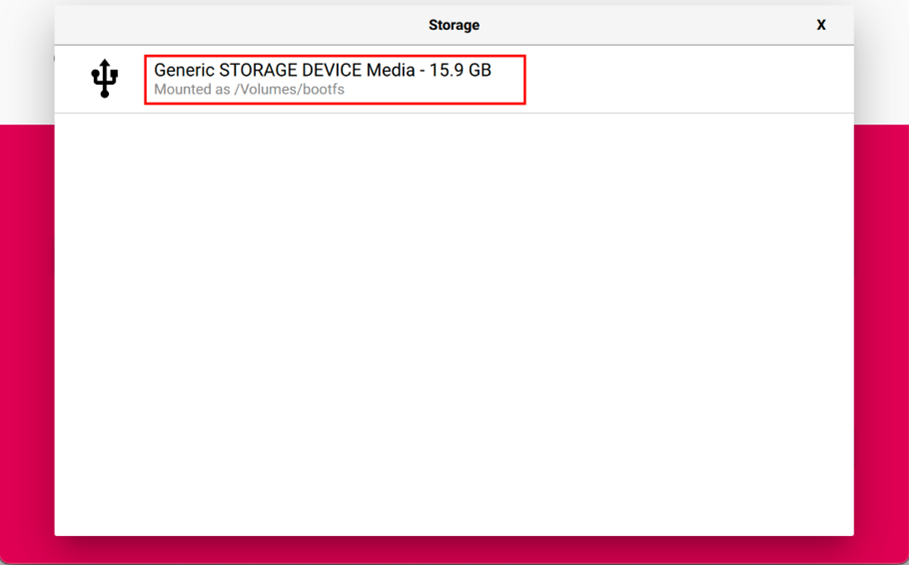
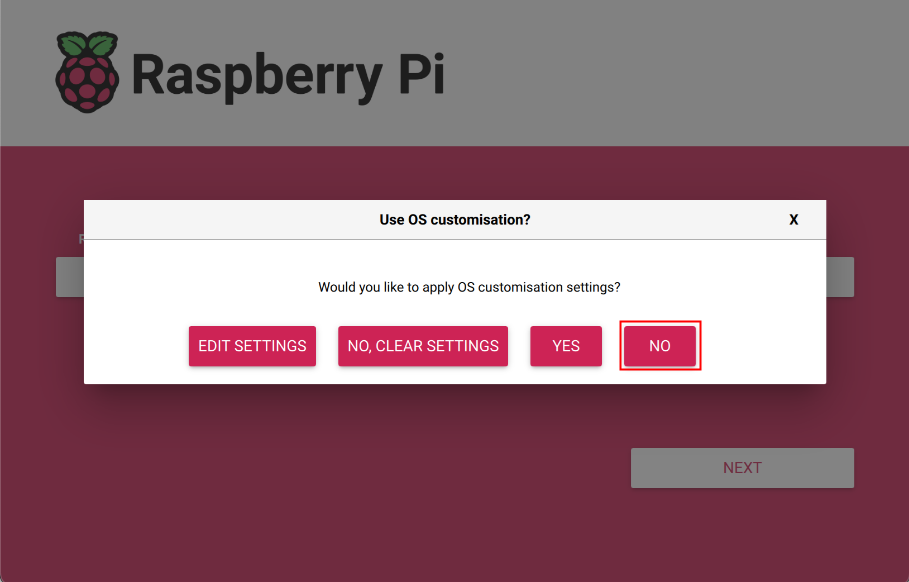
- Click “NEXT”, select "NO " in the pop-up “Use OS customization?” pane.
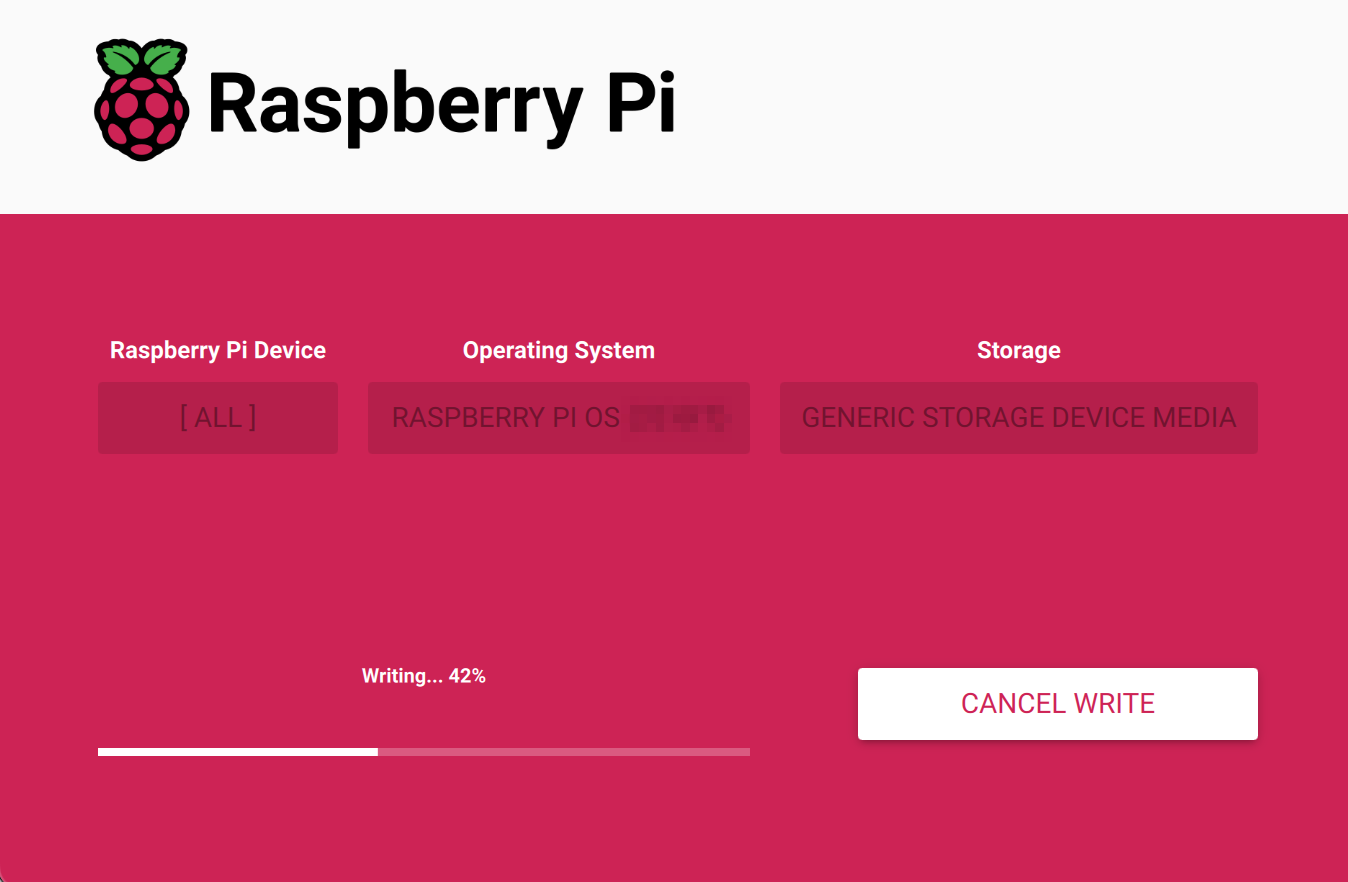
- Select “YES” in the pop-up “Warning” pane to start writing the image.
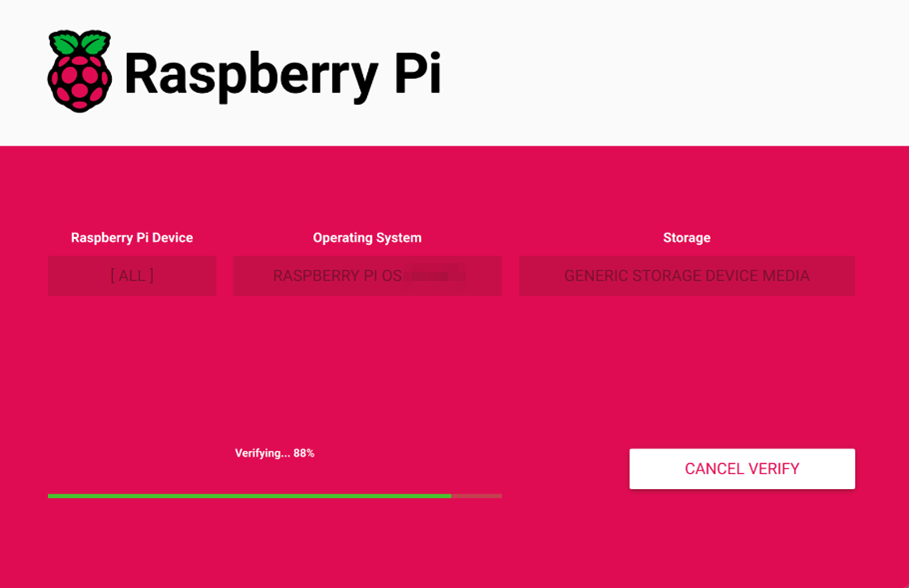
- After the OS writing is completed, the file will be verified.
After the verification is completed, click “CONTINUE” in the pop-up “Write Successful” box.
Close
Raspberry Pi Imager, disconnect the USB flashing cable, set the DIP switch to RUN (positioned toward the reset button), and finally repower the ED-CM0NANO.
5.2.2 Flashing to SD Card
It is recommended to use the Raspberry Pi official tools. The download paths are as follows:
- Raspberry Pi Imager : https://downloads.raspberrypi.org/imager/imager_latest.exe
- SD Card Formatter : https://www.sdcardformatter.com/download/
Preparation:
- The flashing tool has been downloaded and installed on the computer.
- The OS file to be flashed has been obtained.
- A Micro SD card reader has been prepared.
- The Micro SD card to be flashed has been acquired.
Steps:
The steps are described using Windows system as an example.
Before flashing to the SD card, the Micro SD card must be removed. For specific operations, refer to 2.3 Remove Micro SD Card.
Insert the Micro SD card into the card reader, then connect the reader to the computer's USB port.
Open
SD Card Formatter, select the drive letter to be formatted, and click "Format" at the bottom right to begin formatting.
In the pop-up dialog box, click "Yes".
When the formatting is completed, click "OK" in the prompt box.
Close
SD Card Formatter.Open
Raspberry Pi Imager, select "CHOOSE OS" and select "Use Custom" in the pop-up pane.
According to the prompt, select the OS file under the user-defined path and return to the main page.
Click "CHOOSE STORAGE", select the default device in the "Storage" interface, and return to the main page.
- Click “NEXT”, select "NO" in the pop-up “Use OS customization?” pane.
- Select “YES” in the pop-up “Warning” pane to start writing the image.
- After the OS writing is completed, the file will be verified.
After the verification is completed, click “CONTINUE” in the pop-up “Write Successful” box.
Close
Raspberry Pi Imager, and remove the card reader along with the Micro SD card from USB port of PC.Insert the Micro SD card into the ED-CM0NANO, then power on the ED-CM0NANO.
5.3 Installing Firmware Package
After you have finished flashing image on ED-CM0NANO, you need to configure the system by adding edatec apt source and installing firmware package to make the system work. The following is an example of Debian 13 (trixie) desktop version.
Preparation:
- The flashing of the standard Raspberry Pi OS (trixie) image has been completed.
- ED-CM0NANO has booted normally and the required startup configuration has been finalized.
Steps:
- After the ED-CM0NANO starts normally, execute the following commands in the command pane to add the edatec apt source and installing firmware package.
curl -s https://apt.edatec.cn/bsp/ed-install.sh | sudo bash -s cm0nano
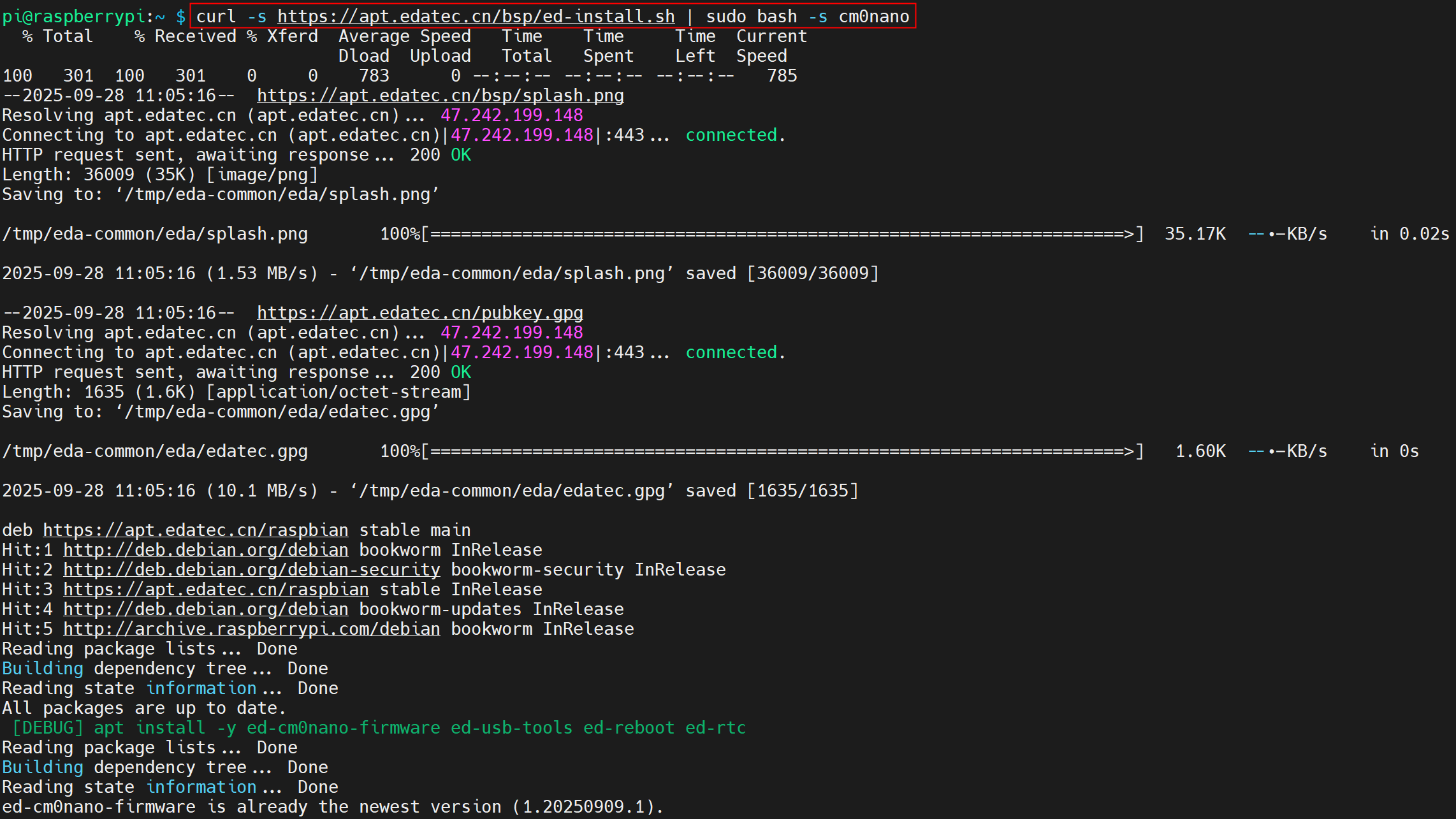
After the installation is complete, the system automatically reboots.
Execute the following command to check whether the firmware package is installed successfully.
dpkg -l | grep ed-
The result in the picture below indicates that the firmware package has been installed successfully.

TIP
If you have installed the wrong firmware package, you can execute sudo apt-get --purge remove package to delete it, where “package” is the package name.